
As organizations accelerate international growth across Europe, the Middle East, and Asia, Chief Human Resources Officers (CHROs), People Operations directors, and Global Mobility leaders are increasingly tasked with orchestrating cross-border expansion. In today’s competitive global landscape, entering a new market is no longer merely a legal or financial exercise; it is fundamentally a human capital endeavor that requires synchronizing talent acquisition, employee experience, and local statutory compliance. When establishing an operational footprint in the United Arab Emirates—one of the world’s most sought-after commercial epicenters—people leaders must navigate a unique intersection between immigration frameworks, statutory employment visa quotas, and commercial real estate. To overcome the significant operational drag of legacy commercial leasing, forward-thinking HR and operations executives are partnering with agile workspace providers like I Business Centers (IBC) to secure turnkey physical infrastructure, expedite talent onboarding, and ensure strict compliance with UAE labor and residency regulations without diverting critical resources away from core human capital priorities.
The Global Mobility Shift: Dubai as a Premier Talent Magnet
Over the past five years, Dubai has transformed into a primary destination for international executive, financial, and technological talent. Progressive economic policies—including the introduction of 100% foreign business ownership on the UAE mainland, modernized labor laws aligned with international best practices, and long-term residency frameworks such as the 10-Year Golden Visa—have dismantled traditional barriers to entry.
For People Operations teams, expanding into Dubai offers compelling advantages:
- Strategic Access to Global Talent Corridors: Positioned at the crossroads of Europe, Asia, and Africa, Dubai provides direct access to diverse, multilingual talent pools across emerging and established markets.
- Favorable Employee Value Proposition (EVP): A zero-personal-income-tax framework, world-class healthcare, high quality of life, and safety rankings create an extraordinary draw for top-tier candidates, significantly reducing international recruitment friction.
- Progressive Labor Standards: Recent modernizations in UAE labor legislation have codified flexible working arrangements, remote-work frameworks, and statutory employee protections, enabling HR leaders to deploy sophisticated, modern talent management models.
However, while Dubai’s regulatory climate welcomes foreign enterprise, translating strategic corporate intent into an operational workforce requires navigating specific regulatory mandates that directly link physical real estate to talent sponsorship.
The Regulatory Interlock: MOHRE Visa Quotas and the Ejari Requirement
A common pitfall for international HR teams entering the UAE is treating physical workplace selection and talent onboarding as separate operational streams. In the UAE mainland, an employer’s legal authority to sponsor employees, issue work permits, and process residency visas is directly governed by the Ministry of Human Resources and Emiratisation (MOHRE) and the Department of Economy and Tourism (DET).
Under UAE commercial law, a mainland company cannot obtain a trade license, activate a corporate labor file, or sponsor employee residence visas without a valid, government-attested commercial lease registered through the Dubai Land Department’s Ejari portal.
The implications for People Operations are direct and substantial:
- Square-Footage-to-Visa Ratios: MOHRE assigns an enterprise’s permissible employment visa allocation based on the verified physical square footage registered under its active Ejari tenancy contract. Companies that fail to accurately project their workforce expansion risk exhausting their visa quotas, abruptly freezing hiring pipelines.
- Regulatory Due Diligence: Unaccredited co-working spaces, informal subleases, or non-compliant commercial arrangements do not qualify for official Ejari issuance. If an organization enters an uncertified tenancy, government authorities will reject labor establishment cards, leaving arriving personnel without legal status or residency protections.
- Corporate Banking and Payroll Compliance: To process employee salaries under the mandatory UAE Wage Protection System (WPS), organizations must maintain an active corporate commercial bank account. UAE financial institutions enforce rigorous Anti-Money Laundering (AML) standards that require authenticated proof of an accredited physical business address verified by Ejari.
For HR leaders, ensuring that workplace procurement strictly complies with municipal licensing criteria is a foundational risk-management imperative.
Redefining the Workplace Experience: Beyond Conventional Commercial Leases
While securing regulatory compliance is vital, People Operations leaders are equally responsible for designing physical work environments that attract, engage, and retain elite talent. Modern international hires expect ergonomic, technologically seamless, and collaborative workspaces that mirror the cultural standards of leading global headquarters.
Historically, providing such an environment required organizations to enter multi-year commercial leases. However, conventional commercial leasing introduces severe friction for talent leaders:
- Protracted Onboarding Timelines: Traditional office units in Dubai are frequently delivered in bare-shell or semi-fitted condition. Completing architectural designs, securing civil defense approvals, and executing fit-out construction routinely consumes four to eight months—delaying critical executive onboarding schedules.
- Operational Distraction: Managing an independent office forces HR and operations teams to spend valuable cycles managing utility registrations with the Dubai Electricity and Water Authority (DEWA), negotiating separate telecommunication and high-speed broadband contracts, and coordinating daily facility janitorial services.
- Inflexible Headcount Scaling: Rigid multi-year commercial leases penalize organizational volatility. A company entering a fixed-term lease for twenty desks cannot easily downscale if market priorities pivot, nor can it quickly accommodate a sudden surge in regional hiring without leasing additional disconnected floor plates.
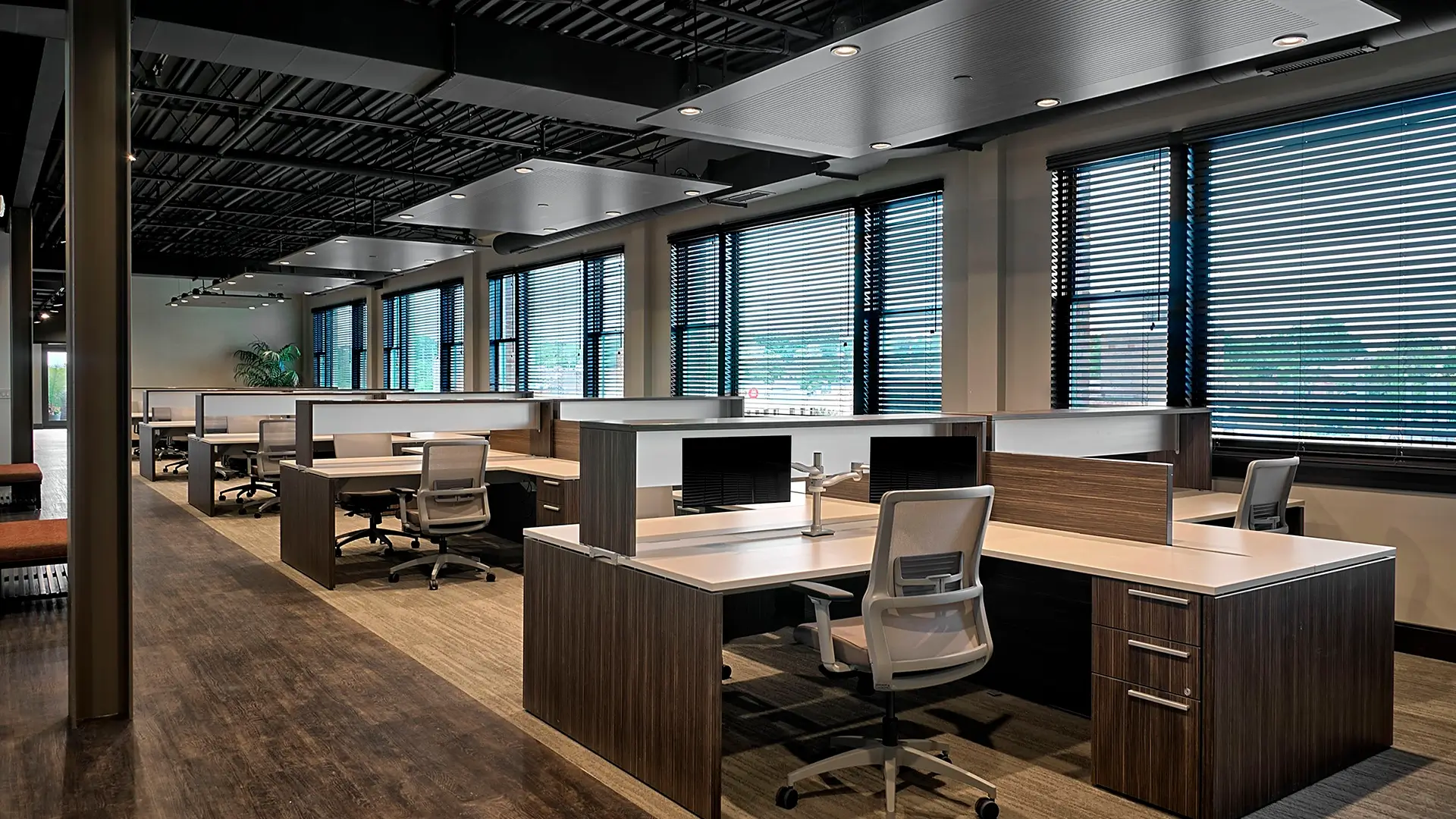
To maintain focus on talent enablement rather than facility maintenance, organizations are increasingly turning to all-inclusive serviced office spaces and setup solutions. Managed business centers provide fully furnished private executive suites, ergonomic workstation configurations, enterprise-grade connectivity, and dedicated front-desk reception support on day one. By outsourcing physical property operations, HR departments ensure that new personnel step into an immaculate, fully functional corporate environment immediately upon arrival.
Managing Distributed Teams: The Strategic Role of Compliant Virtual Offices
The modern post-pandemic talent strategy rarely relies entirely on full-time in-office attendance. Many organizations expanding into the Middle East operate hybrid or remote-first structures, deploying distributed software engineers, roving regional sales managers, and digital consultants across multiple territories.
For remote-first organizations, leasing an expansive physical office solely to satisfy municipal licensing criteria represents an inefficient allocation of capital. To support these agile workforce architectures without compromising statutory compliance, accredited business centers provide compliant virtual office solutions in Dubai integrated with formal Ejari certification.
Under this framework, organizations secure a prestigious, recognized corporate address, professional telephone answering, physical mail handling, and certified Ejari documentation. This enables People Operations to satisfy all statutory labor and immigration criteria, sponsor necessary regional personnel, and maintain full WPS payroll compliance while supporting a decentralized, remote team structure. When local team members or visiting executives require in-person collaboration, on-demand meeting rooms and executive conference suites provide instant physical touchpoints without the burden of continuous commercial overhead.
Location Strategy as a Talent Magnet: Mapping Dubai’s Premier Commercial Hubs
In global mobility, an office’s geographic location serves as a powerful employer branding asset. A well-located workplace enhances candidate attraction, minimizes daily commute friction, and reinforces institutional credibility. Across Dubai, distinct commercial corridors offer tailored advantages for diverse workforce profiles:
1. Business Bay: Executive Prestige and Financial Connectivity
Directly bordering Downtown Dubai and the Dubai International Financial Centre (DIFC), Business Bay is the premier corporate district for financial institutions, legal consultancies, investment groups, and multinational management teams. Locating teams within premier Business Bay office spaces provides high-caliber professionals with immediate access to executive dining, luxury hospitality, and public transit connectivity along the Dubai Water Canal, elevating the company’s employer brand on an international scale.
2. Deira and Port Saeed: Logistical Centricity and Administrative Ease
Positioned along Dubai Creek, Deira and adjacent Port Saeed represent Dubai’s historical commercial backbone. For supply chain coordinators, trade operators, and administrative teams, locations such as the Twin Towers on Baniyas Road offer direct proximity to Dubai International Airport (DXB), key customs agencies, and municipal labor offices, streamlining transit for regional personnel and traveling executives.
3. Motor City: Suburban Modernity for Balanced Work-Life Dynamics
Further inland along major arterial highways, suburban hubs like Motor City provide an appealing environment for technology startups, creative agencies, and digital consulting teams. Featuring modern commercial architecture, abundant parking, and integrated lifestyle amenities, suburban commercial hubs offer an attractive, low-stress daily commute for talent living in Dubai’s residential communities.
Total Cost of Workforce (TCW): Aligning Workplace Strategy with HR Budgets
Forward-thinking people leaders evaluate workplace solutions through the lens of the Total Cost of Workforce (TCW). By replacing heavy capital expenditures (CapEx)—such as fit-outs, security deposits, and multi-year lease guarantees—with predictable, all-inclusive operational expenditures (OpEx), companies preserve working capital that can be directly redeployed toward talent acquisition, compensation benchmarking, comprehensive health benefits, and employee retention programs.
Moreover, managed workspace models eliminate hidden facility management liabilities, providing People Operations teams with complete budgetary transparency and the financial agility necessary to scale regional operations responsibly.
The Strategic Path Forward for International HR Leaders
Entering the Middle East market represents an extraordinary growth opportunity for international enterprises. However, sustainable regional success requires aligning business objectives, immigration compliance, and employee experience into a unified operational strategy.
By leveraging certified, managed workspace partnerships that provide instant regulatory compliance, official Ejari certification, and premium multi-hub commercial facilities, HR leaders can confidently bypass conventional real estate bottlenecks. In doing so, People Operations transforms commercial real estate from a cumbersome administrative hurdle into an agile launchpad for regional talent growth.
