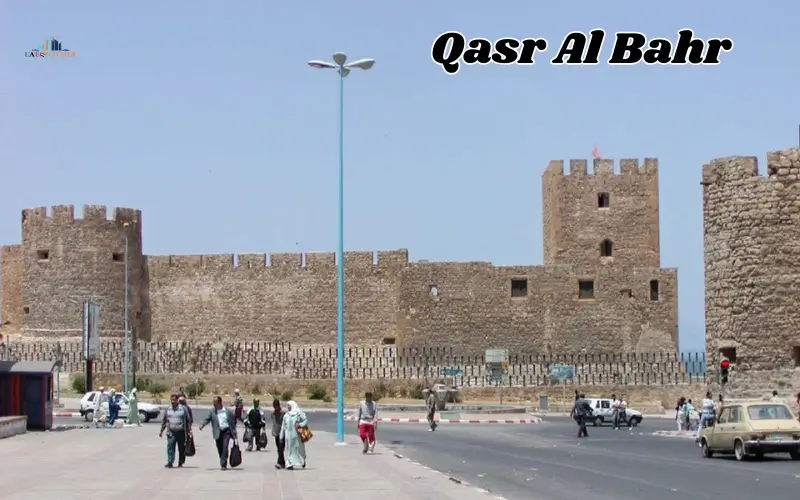
Qasr Al Bahr, meaning “Palace of the Sea,” is among the most significant landmarks in the United Arab Emirates. It’s located within Abu Dhabi along the beautiful Arabian Gulf. The palace of the president is not just a structure. It is a symbol of the nation’s history of royalty, the nation’s cultural heritage, and its important diplomatic significance.
In contrast to famous monuments like the Burj Khalifa or the Sheikh Zayed Grand Mosque, Qasr Al Bahr is not accessible to the general members of the public. It’s a private and enigmatic. This article focuses on the history of the palace, its architecture, its diplomatic significance, its role in the process, as well as its cultural significance. Knowing more about Qasr Al Bahr helps understand the UAE’s culture, governance, and its global footprint.
Location and Strategic Positioning
Prime Waterfront Position Along the Corniche
Qasr Al Bahr, Abu Dhabi, is situated on Delma Street, near the Corniche, and is among the most prestigious and beautiful regions. The location places the palace in Abu Dhabi’s most sought-after district. It is which is surrounded by diplomatic offices, luxurious hotels, and luxurious residential development.
The Corniche region represents Abu Dhabi’s commitment to design excellence. It is home to beachfront promenades, parks, public beaches, and leisure infrastructure. Qasr Al Bahr’s involvement increases its prestige and also contributes to its reputation as the social and political center of Abu Dhabi.
Proximity to Key Landmarks and Institutions
The hotel’s position provides quick accessibility to a variety of important places:
Sheikh Zayed Grand Mosque: The Sheikh Zayed Grand Mosque is one of the biggest mosques on earth and is an absolute must-see attraction situated close to. It is a convenient location for presidential events with cultural and religious observances.
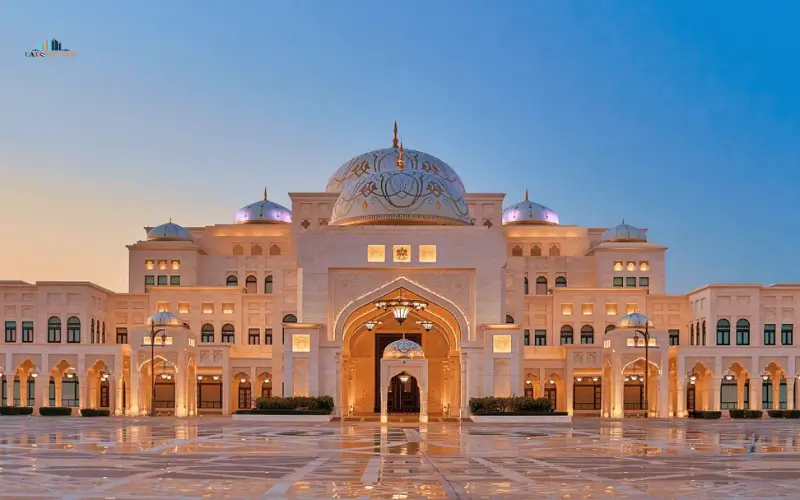
Presidential Palace (Qasr Al Watan): The official Presidential Palace, now open to the public, is located just a few hundred yards from Qasr Al Bahr, creating an administrative complex which handles all residential and private functions, as well as official diplomatic functions.
Al Reem Island: Al Reem Island is an artificial island that houses several luxurious commercial and residential buildings, which are located close by, and is a symbol of Abu Dhabi’s current urbanization.
From Maritime Watchtower to Presidential Palace
Early Origins and Development
Qasr Al Bahr was first constructed in the late 18th century. The main reason for its construction was to serve as an observation tower. It protected Abu Dhabi from maritime threats.
The coastal location was strategically important. It protected the early settlements against attack and invasion. The population relied on fishing, pearl diving, and trading. The design of the palace’s first phase was a reflection of these needs.
Evolution into a Royal Residence
As time passed, Qasr Al Bahr changed dramatically. It was further expanded and strengthened. The palace was transformed into a residence for the rulers of the Al Nahyan family. It was also the government’s seat.
This shift is in line with the growth of Abu Dhabi. Abu Dhabi has evolved from a pearling village into an important business and political center.
The late Sheikh Zayed, who was the creator of the UAE, was a resident of the palace. It’s time in the palace ggivessignificance both emotional and historical. In the present, it represents the country’s beginning as well as modernization.
Modern Role as Presidential Venue
At present, Qasr Al Bahr is an official residence and a ceremonial palace. It holds high-level conferences and other events.
As an example, for instance, the President of the United Arab Emirates, Sheikh Mohamed, as well asthe Vice President, Sheikh Mohammed bin Rashid, have met in this place. They talk about matters of national importance, such as the well-being of Emiratis as well as their country’s developmental plans.
The palace has continued to play an integral role in the United Arab Emirates’ political system. It blends history, culture, and governance into one iconic place.
Architectural Excellence: Blending Traditional and Contemporary Design
Islamic Architectural Elements
The design of the palace’s architecture shows a stunning blend of classical Islamic architectural styles with contemporary methods of construction. The arches, domes, and courtyards evoke the classical Islamic design, whereas its building materials, such as marble, stone,e and intricate carvingsemphasize the artistic quality of artisanship in the royal realm.
The most important architectural elements are:
Great Facades along with Exterior Design: The palace’s exterior blends strength and aesthetic elegance, with imposing walls that convey security and sophistication. The style of the design evokes Arabian fortresses, while adding sophisticated embellishments.
The Ornamental Domes: As well as Geometric patterns,s Islamic geometric patterns are adorning a variety of designs, evoking ancient design practices. They serve as aesthetic and symbolic functions that represent mathematical precision as well as spiritual harmony.
Courtyard Architecture: The traditional Islamic courtyard designs provide spaces that allow natural airflow, create separate outdoor spaces, and allow for the interaction of shadows and light during the day.
Contemporary Construction Standards
In addition to preserving traditional design, Qasr Al Bahr incorporates contemporary building technology, climate control systems, and a security system. This palace is an example of how contemporary building techniques can be used to support classical architectural designs, creating structures that are historically authentic as well as functionally modern.
Coastal Integration and Landscaping
The relationship between the palace and its waterside setting is a thoughtful design. Landscape design incorporates indigenous plant species that have been adapted tothe Arabian climate. Additionally, the design of the building makes the most of Gulf views and the coastal breezes. The gardens are lush, whichcreatese a tranquil ambience despite Abu Dhabi’s dry climate.
Security and Restricted Access
The palace is currently an area that is restricted, with it being surrounded by the UAE Navy headquarters located right across the street. The security arrangements provide adequate security to the presidential functions and also eensurethe palace’s privacy as well as security for the operation.
Diplomatic and Governmental Functions
Venue for High-Level Political Meetings
Qasr Al Bahr serves as the primary location for important government-related activities. The palace is frequently a venue for international top leaders, further establishing the position of the UAE as a major participant in the international arena. The diplomatic activities range from small-scale meetings with foreign ministers andheadsd of state, to multilateral talks on international cooperation and regional partnerships.
Recent diplomatic activities show how important the palace continues to be:
UAE President Sheikh Mohamed bin Zayed Al Nahyan visited the Dr. Subrahmanyam Jaishankar, the Indian Minister of External Affairs, at Qasr Al Bahr at Qasr Al Bahr, where they discussed the various aspects of their bilateral relationship within the context of the Comprehensive Strategic Partnership.
National Policy Development and Strategic Planning
Beyond the diplomatic function, Qasr Al Bahr hosts government meetings within the internal administration during which national policy is formulated, and decisions on strategic direction are taken. The palace is an area for royal meetings where members of the royal family talk about the future of the country.
An example of recent significant policy announcements that were made in the palace, which includes housing plans. The housing program, which is massive in scope, was revealed with the president, Sheikh Moham, at Qasr Al Bahr, including the building of 25,244 housing units for the Emirati community over five years, for Dh94 billion. There are also 14,876 plots of residential land for a total in the region of Dh12 billion.
Cultural and Social Events
Alongside the diplomatic and political spheres, Qasr Al Bahr is utilized for social and cultural gatherings, during which the royal family is invited to host prominent guests, scholars, and prominent figures to talk about things that influence the growth and development of the UAE. These meetings focus on developments in the economy, global alliances, and humanitarian initiatives.
Development of leadership takes place within the palace. For example, the President Sheikh Mohamed has welcomed the next batch of the UAE Government Leaders Programme at an event at Qasr Al Bahr in November 2025. This demonstrates how the palace can help develop the future Emirati leaders.
Cultural Significance and National Symbolism
Embodiment of UAE Heritage and Leadership
Qasr Al Bahr is a symbol of leadership and good management, and serves as a venue of royal majesty to perform national duties while connecting the country’s maritime roots alongside its current identity, highlighting the common tale of tradition and progress. It is the symbol forthe tradition of government from the beginning of the country to its present global fame.
The title itself–“Palace of the Sea“– carries significant symbolic meaning. It is a tribute to the heritage of maritime culture in the UAE, as well as the pearling industry that helped to sustain early communities, and the Arabian Gulf waters that have created the UAE’s national identity. This ties to the sea is a reflection of both the past and an openness towards the rest of the world.
Symbol of National Unity and Progress
In the eyes of Emirati people, Qasr Al Bahr represents more than a building for the government. It is a symbol of the country’s progress from its humble beginnings and into international recognition, expressing values of determination, unity, and dedication tothe welfare of the citizens. The palace is a physical representation of the nation’s ambitions and successes.
Privacy and Exclusivity Enhancing Mystique
In contrast to many palaces around the world that are now tourist destinations or museums, Qasr Al Bahr remains an extremely secure and private location, and the secluded nature around it enhances its appeal. Its exclusivity sets it apart from the more accessible palaces such as Buckingham Palace or the White House, as it remains a functioning president’s residence, not being a tourist attraction.
Since it is a private property and an area of exclusivity, the palace has no images or information about its insides. This has led to a lot of speculation and curiosity. Its privacy is a strategic advantage as it ensures security, while also preserving the palace’s status as a venue that is used for sensitive functions of the government.
Impact on Surrounding Real Estate and Urban Development
Prestige Effect on Nearby Properties
The presence of the palace has a significant impact on properties in the surrounding area and their value. The properties located in the Corniche, Al Bateen, and Marina District enjoy high demand and a high value due to their close proximity to this iconic royal site.
Real estate advantages include:
Great Waterfront Views: The residential homes in the area provide panoramic views towards the Arabian Gulf and Abu Dhabi’s growing skyline. The royal area adds to the unique character of the neighborhood.
Luxury Development Standards: The region that surrounds Qasr Al Bahr features world-class commercial and residential developments demonstrating the highest standards that come with the proximity of presidential facilities.
Reliable Investment Returns: This exclusive area offers steady rental returns and capital growth. This makes it appealing to investors as well as users who are looking for premium locations.
Qasr El Bahr Neighborhood Development
Qasr El Bahr is an emerging settlement located in the middle of prominent residential communities. It is bounded by the Sheikh Zayed Bin Sultan Street E10 on one hand and by the river on the other. This area, which takes its name from the Palace, is now synonymous with luxurious living and a prime location.
The area offers a mixture of commercial and residential property, including villas, apartments, and offices for either purchase or rent, and is famous for its stunning views of the water. Residents can access the parks, leisure facilities,s luxurious hotels, such as the Bab Al Qasr Hotel, as well as the amenities for culture that make up Abu Dhabi’s top district.
Comparative Analysis: Qasr Al Bahr Among Global Royal Residences
Differentiating Featurefrom Otherer Palaces
It is frequently considered to be a model for other residences of world leaders, for instance, Buckingham Palace in the UK, as well as the White House in the US. However, several factors distinguish Qasr Al Bahr:
Access Restricted: Unlike Buckingham Palace, which offers guided tours in the summer, as well as the White House, which conducts public tours, Qasr Al Bahr maintains total privacy, only accessible to guests who are invited by the government and other dignitaries.
Working Presidential Residence: Although most palaces of the royal family serve solely as a place for ceremonies, Qasr Al Bahr actively serves as a residence as well as a government venue. It hosts regular sessions at the highest level as well as policy discussions.
Maritime Heritage Connection The location of the palace’s coast and the name imply a special relationship to maritime traditions that distinguish it from the traditional urban or in-line royal palaces.
Regional Context and Middle Eastern Royal Architecture
In the Gulf zone, Qasr Al Bahr represents the unique architectural and functional style of royal residences. It is a blend of modernity and tradition and privacy, while also embracing diplomatic transparency as well as national symbols, along with practical government functions. This harmony reflects the broader UAE strategies for advancement that recognize tradition while encouraging progress.
Latest Developments and Recent Activities
High-Profile Political Meetings
In the year 2025, Qasr Al Bahr will be the host of numerous major meetings.
In the month of July 2025, the president, Sheikh Mohame,d evaluated the UAE’s plans for the future in talks in the presence of Sheikh Mohammed bin Rashid at Qasr Al Bahr. They looked at ways to move faster toward the goals of the UAE.
In December 2025, the royal palace hosted the first international diplomatic meeting with India and India, which demonstrates its ongoing influence in international policy and bilateral relations.
National Program Announcements
The palace remains the place for key policies that affect Emirati citizens. The September 2025 housing plan announcement is a good example of the way Qasr Al Bahr functions as the venue for initiatives that directly affect ccitizens’quality of life as well as the long-term well-being of citizens.
Leadership Development Initiatives
The event in November 2025, to honor the UAE Government Leaders Programme participants,s founded in 2008 to increase the capabilities of the leaders in a variety of areas, highlights the palace’s contribution to cultivating future leaders for the nation.
Visiting Abu Dhabi: Experiencing the Qasr Al Bahr Area
Public Engagement Limitations
Although the palace is limited, guests to Abu Dhabi can experience the surroundings’ atmosphere and importance. The Corniche zone offers public access to promenades along the waterfront as well as beaches and parks where the exterior of the palace is visible from the appropriate distances.
Nearby Attractions and Accommodations
The Qasr Al Bahr area offers many attractions to visitors.
Bab Al Qasr Hotel: This luxurious five-star hotel close to the palace is a world-class hotel with extensive amenities, which include the largest Abu Dhabi beach resorts, a private Moroccan wellness spa and fitness centre, and 677 luxurious suites and rooms.
Corniche Promenade: The beachfront promenade extends for miles with cycling trails and walking trails, as well as public beaches and leisure areas with spectacular Gulf views.
Cultural Sites Gallery, museums, and cultural centres all over the city offer insights into Emirati tradition and modern creative expression.
Conclusion:
Qasr Al Bahr stands as an important image of the United Arab Emirates’ history in governance, as well as its global status. Since its first use in the form of a watchtower until the present role as a governmental, presidential location, Qasr Al Bahr reflects the country’s ambition, power, and dedication to progress. Though it’s mostly private, it remains a major influencer of the city’s identity and culture,e and hosts important policy-making decisions and serves as the central point of diplomatic and leadership. Qasr Al Bahr embodies both traditional and contemporary government, proving to be a significant image of the country’s historical and cultural heritage.
FAQs
Does Qasr al Bahr offer services to guests outside of the hotel?
Visitors who are visiting during the day may have access to cafes, restaurants, and a few facilities.
Are visitors allowed to use the beach on their own?
Private access to the beach is generally reserved exclusively for guests of hotels, some day passes could be made available.
Are there cafes, restaurants, or eateries?
There are plenty of restaurants serving local and international dishes.
Are they family-friendly?
Yes, there are safe areas for kids and wide spaces.
What are the operating hours?
Restaurants and hotels typically operate during the hours of 10:00 AM until 11:59 PM.
Is photography permitted?
Absolutely, but only in private zones.
How can I reach Qasr Al Bahr?
It is accessible by public transportation, or by walking/cycling to the nearby Dubai Marina.
Last modified: January 27, 2026